0510-83570861


2025-09-26
The main difference between honing and superfinishing lies in precision and surface quality. Honing is primarily used to correct geometry and remove material in controlled amounts, while superfinishing is a fine finishing process designed to achieve exceptionally smooth surfaces with low roughness and improved functional performance. In short, honing prepares the surface, and superfinishing perfects it.
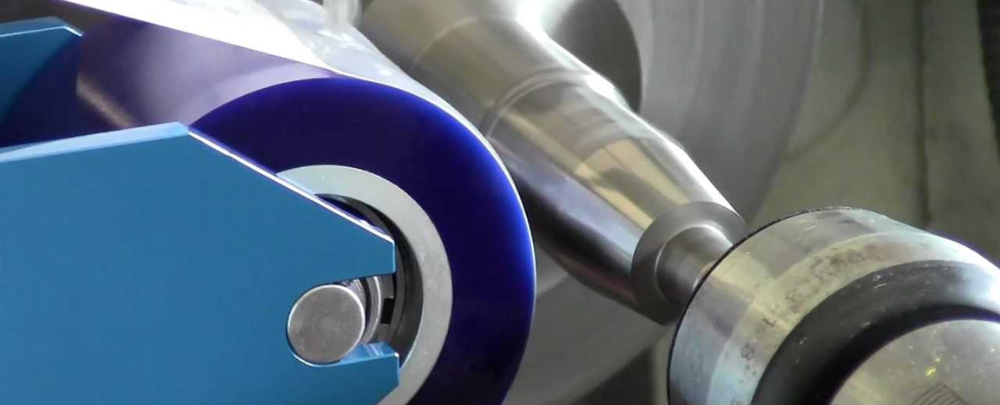
Honing: Improves dimensional accuracy, corrects shape errors (like out-of-roundness or taper), and creates a cross-hatch surface pattern for lubrication retention.
Superfinishing: Focuses on reducing surface roughness, removing the damaged surface layer, and improving bearing ratios for high-precision components.
Honing: Removes material in the range of 10–50 µm per pass, making it suitable for correcting errors and refining geometry.
Superfinishing: Removes only 1–2 µm, ensuring the geometry remains unchanged while eliminating micro-defects and achieving ultra-smooth finishes.
Honing Tools: Abrasive stones mounted on mandrels. Machines are designed to control feed, stroke, and pressure.
Super Finishing Machine: Uses fine abrasive films or stones with oscillating movement under low pressure. These machines are engineered for extreme precision and surface enhancement.
Honing: Produces a surface with Ra typically around 0.2–0.4 µm, with a cross-hatch structure that helps retain oil.
Superfinishing: Achieves Ra values as low as 0.01–0.05 µm, with a plateaued surface that minimizes friction and wear.
Honing: Cylinder liners, hydraulic sleeves, gears, and applications requiring oil retention.
Superfinishing: Bearing races, crankshafts, camshafts, and aerospace or medical components requiring mirror-like finishes.
| Aspect | Honing | Superfinishing |
Primary Purpose | Corrects geometry, improves dimensional accuracy, and creates cross-hatch texture | Enhances surface quality, reduces roughness, and improves bearing ratio |
Material Removal Rate | Higher (10–50 µm per pass) | Very low (1–2 µm or less) |
Surface Roughness (Ra) | Typically 0.2–0.4 µm | As low as 0.01–0.05 µm (mirror-like finish) |
Surface Texture | Cross-hatch pattern for oil retention | Plateau finish that minimizes friction and wear |
Tools Used | Abrasive stones mounted on honing mandrels | Fine abrasive films or stones with oscillating movement under low pressure |
Geometry Correction | Yes (fixes taper, roundness, and straightness errors) | No (only refines surface without altering geometry) |
Applications | Cylinder liners, hydraulic sleeves, gears | Bearing races, crankshafts, camshafts, aerospace and medical components |
Machine Type | Honing machine with controlled feed, stroke, and pressure | Super finishing machine designed for ultra-precision finishing |
Lubrication Effect | Improves oil retention due to cross-hatch grooves | Reduces lubricant film breakdown by smoothing asperities |
Industries | Automotive, hydraulic, heavy machinery | Automotive, aerospace, bearing manufacturing, precision engineering, medical devices |
Process Sequence | Usually performed before superfinishing | Typically performed after honing as a final finishing process |
A super finishing machine is indispensable in industries where performance, reliability, and durability depend on surface quality. By improving micro-geometry and removing residual stress, superfinishing extends component life and enhances energy efficiency in automotive, aerospace, and precision engineering applications.
Honing and superfinishing are not competing processes but complementary steps in achieving both accuracy and performance. Honing prepares the geometry and texture, while superfinishing brings the surface to perfection. For manufacturers demanding world-class quality, investing in a super finishing machine ensures components meet the highest standards of efficiency and durability.
 Superfinishing for Automotive Components: Crankshafts, Camshafts, and Transmission PartsNovember 14, 2025In modern automotive manufacturing, achieving ultra-low surface roughness and consistent dimensional precision is essential for performance, fuel efficiency, and durability.While grinding and polishin...view
 What Is the Bearing's Superfinishing Process? Is Superfinishing Important for Bearings?January 13, 2026The superfinishing process is not only used in the bearing industry but is also extensively utilized in engine manufacturing. Additionally, other precision machinery and instruments are beginning to a...view
 Application and Advantages of Superfinishing Machines in Surface TreatmentJanuary 13, 2026Basic Principles and Working Mechanism of Superfinishing MachineThe superfinishing machine is a high-precision surface treatment device mainly used for micron-level surface processing of materials lik...view
 Call us on:
  Email Us:
  No. 52-1 Zhang Road, Meicun Industrial Park, New District, Wuxi City, Jiangsu, China.