0510-83570861


2025-09-03
Superfinishing is a critical step in precision bearing manufacturing, ensuring ultra-low surface roughness, improved bearing ratios, and extended service life. While grinding and honing establish geometry, a super finishing machine perfects the surface by removing microscopic peaks and defects, delivering consistent, high-performance bearings required in industries like automotive, aerospace, and robotics.
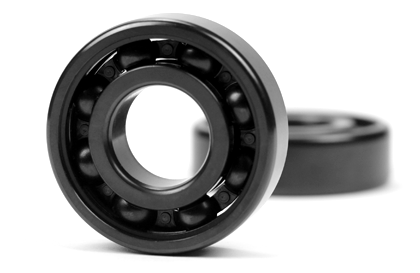
Precision bearings operate under extreme loads, high speeds, and minimal lubrication gaps. Any surface irregularities increase friction, heat, and wear. Superfinishing provides:
Reduced Friction Coefficient – Minimizes power loss and improves energy efficiency.
Extended Fatigue Life – Eliminates surface stress concentrations that cause micro-cracks.
Enhanced Lubrication Retention – Plateau surfaces reduce oil film breakdown.
Tight Dimensional Control – Consistent size and shape across mass production.
A super finishing machine uses fine abrasive stones or films with low-pressure oscillations. Unlike grinding, which leaves directional marks, superfinishing achieves a cross-hatch plateaued surface with Ra values as low as 0.01 µm. This ensures:
Superior roundness and cylindricity.
Elimination of grinding burns and heat-affected layers.
Reduced noise and vibration during operation.
Superfinishing is applied across multiple bearing elements:
Inner and Outer Rings – To improve rolling contact surfaces and fatigue strength.
Rolling Elements (balls, rollers, needles) – To reduce friction, especially in high-speed applications.
Cages – For smoother movement and lower wear in advanced bearing designs.
The purpose is to enhance surface finish, reduce friction, and increase fatigue resistance. Superfinishing ensures bearings perform reliably under demanding conditions.
By removing surface asperities and creating a plateau finish, superfinishing prevents premature wear, micro-crack initiation, and lubricant film collapse—key factors in extending bearing life.
Typically, Ra values between 0.01–0.05 µm are achieved with superfinishing, depending on application requirements such as high-speed rotation or heavy load capacity.
No. Grinding establishes geometry and size, while superfinishing refines the surface. Both processes are complementary in precision bearing manufacturing.
Automotive (EV motors, transmissions), aerospace (turbine engines), robotics, wind energy, and medical equipment all rely heavily on superfinished bearings for performance and reliability.
In modern bearing production, superfinishing is no longer optional—it is a strategic necessity. A high-performance super finishing machine ensures bearings meet the rigorous demands of next-generation engineering, from quieter EV drivetrains to long-lasting aerospace components. For manufacturers targeting premium markets, investing in superfinishing technology directly translates into better product reliability, lower warranty costs, and higher customer satisfaction.
 Superfinishing for Automotive Components: Crankshafts, Camshafts, and Transmission PartsNovember 14, 2025In modern automotive manufacturing, achieving ultra-low surface roughness and consistent dimensional precision is essential for performance, fuel efficiency, and durability.While grinding and polishin...viewWhy Use Superfinishing?March 7, 2025Bearing from the mill often have a finish that is not particularly smooth or aesthetically pleasing. To improve their surface quality and appeal, and superfinishing processes must be used.Superfinishi...view
 What Is the Bearing's Superfinishing Process? Is Superfinishing Important for Bearings?January 13, 2026The superfinishing process is not only used in the bearing industry but is also extensively utilized in engine manufacturing. Additionally, other precision machinery and instruments are beginning to a...view
 Call us on:
  Email Us:
  No. 52-1 Zhang Road, Meicun Industrial Park, New District, Wuxi City, Jiangsu, China.