0510-83570861


2025-08-22
When it comes to mirror-like surface finishes, traditional processes such as grinding, lapping, or polishing can only go so far. They remove material effectively but often leave directional marks, heat damage, or micro-cracks. In contrast, a super finishing machine produces ultra-smooth, plateaued surfaces with Ra values as low as 0.01 µm, making it the preferred choice for high-performance industries like aerospace, automotive, and precision bearings.
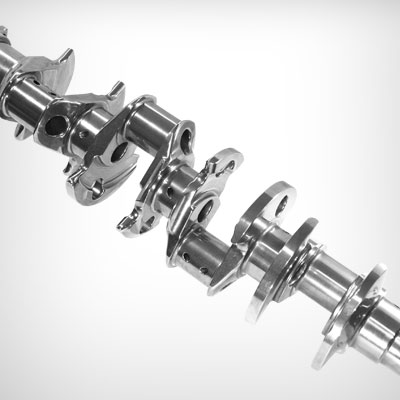
Grinding & Polishing: Typically achieve Ra values around 0.1–0.4 µm. While smooth to the eye, microscopic peaks remain that cause friction and wear.
Superfinishing: Delivers Ra as low as 0.01 µm, creating a true mirror-like surface free from directional scratches.
Traditional Methods: Grinding corrects geometry but may leave residual stresses or distortions. Polishing improves appearance but doesn’t guarantee precision.
Superfinishing: Maintains geometry while refining surface quality. It removes only 1–2 µm of material, ensuring tolerances remain intact.
Grinding & Polishing: Improve aesthetics but don’t always enhance performance under high loads or speeds.
Superfinishing: Increases bearing ratios, reduces friction, lowers noise, and extends component life in critical applications.
Grinding: Generates heat, which can cause burns, tensile stress, or micro-cracks.
Polishing: Less aggressive, but may still smear material instead of removing defects.
Superfinishing: Operates under low pressure with oscillating motion, eliminating heat-affected zones.
Traditional Methods: Suitable for general manufacturing where appearance or basic smoothness is sufficient.
Superfinishing: Required for aerospace turbine components, EV drivetrain parts, precision bearings, and medical implants—where reliability and durability are non-negotiable.
Yes. Polishing improves appearance but leaves micro-roughness. Superfinishing produces true mirror finishes with controlled geometry and functional benefits.
No. Grinding establishes geometry and size. Superfinishing is a complementary step that refines the surface to perfection.
Hardened steels, ceramics, and alloys used in aerospace, automotive, and medical industries gain the most performance improvements from superfinishing.
Depending on the application, a super finishing machine can reach Ra values as low as 0.01 µm, ensuring exceptional smoothness and consistency.
A plateau finish removes surface peaks while leaving micro-valleys for lubrication retention, resulting in reduced friction, longer service life, and higher efficiency compared to polished-only surfaces.
Traditional finishing methods—grinding, lapping, and polishing—still play important roles in manufacturing, but they cannot achieve the precision, functionality, and durability demanded by modern engineering. A super finishing machine bridges this gap by producing mirror-like, plateaued surfaces that not only look perfect but also perform flawlessly. For manufacturers aiming at high-value markets, adopting superfinishing is the key to reducing warranty costs, improving energy efficiency, and delivering components that consistently outperform the competition.
 Choosing the Right Roller Bearing Superfinishing Machine for Your Bearing FactoryJuly 8, 2026Selecting the right Roller Bearing Superfinishing Machine directly affects bearing accuracy, surface roughness, production efficiency, and long-term manufacturing costs. The ideal solution depends on ...viewSuper Finishing vs. Grinding: Which Delivers Better Precision?October 21, 2025In precision manufacturing, grinding and superfinishing are both essential processes—but they serve very different purposes. Grinding defines geometry and dimensional accuracy, while superfinishing r...view
 The Technological Frontiers of Ultra-Precision Manufacturing and Micro-Precision ManufacturingJanuary 13, 2026In the era of continuous breakthroughs in modern manufacturing technology, "precision" is no longer just a numerical indicator but the core force behind product performance, function realiza...view
 Call us on:
  Email Us:
  No. 52-1 Zhang Road, Meicun Industrial Park, New District, Wuxi City, Jiangsu, China.