0510-83570861


2025-11-14
In most precision industries, superfinishing has already replaced traditional polishing for critical components — but not in every case.
A super finishing machine delivers far superior control over surface geometry, roughness, and microstructure integrity compared to manual or mechanical polishing. However, polishing still holds value for cosmetic or low-tolerance applications where mirror appearance, not functional performance, is the priority.
The short answer: superfinishing can replace polishing for performance-critical parts, but not necessarily for decorative or purely aesthetic surfaces.
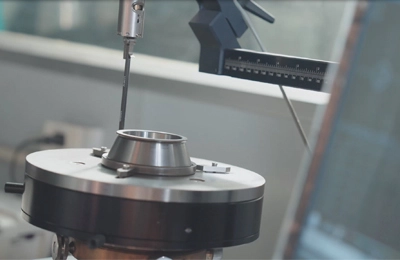
Though both aim to improve surface smoothness, their purpose, mechanism, and results are fundamentally different.
| Aspect | Superfinishing | Polishing |
Purpose | Enhance functional surface integrity | Improve visual appearance or gloss |
Process Mechanism | Low-pressure, fine-abrasive oscillation with controlled motion | Manual or rotary buffing using soft abrasives or compounds |
Material Removal | 0.5–2 µm (very controlled) | Variable, may round edges or alter geometry |
Surface Roughness (Ra) | ≤ 0.02 µm typical | ~0.05–0.1 µm, depending on skill and material |
Surface Structure | Plateaued — retains lubricant film | Smooth but closed surface — poor lubrication retention |
Consistency | Highly repeatable, machine-controlled | Operator-dependent, less consistent |
A superfinish machine is designed to remove the damaged layer left by grinding, not just to shine the surface. This distinction makes superfinishing far more suitable for high-precision mechanical components.
For bearing raceways, rollers, and cages, polishing is no longer used — it cannot meet the Ra ≤ 0.02 µm or the plateaued texture required for low friction and long fatigue life.
A super finisher machine ensures precise removal of the heat-affected layer, improving load-bearing capability, reducing noise, and extending bearing service life.
Crankshafts, camshafts, and transmission shafts all rely on superfinished surfaces for oil film retention and wear resistance. Polishing would damage micro-geometry and compromise function.
Superfinishing provides the functional surface needed for stable lubrication and consistent performance.
Superfinishing has entirely replaced polishing for aircraft bearings, turbine shafts, and actuator rods, where dimensional accuracy and fatigue strength are critical.
Even a few nanometers of surface damage from polishing can lead to vibration, heat generation, or premature failure.
In valve spools and piston rods, surface finish affects sealing and leakage. Super finishing machines deliver the consistent Ra and Rz values required for smooth sliding and tight sealing — beyond what polishing can achieve.
Although superfinishing dominates high-precision manufacturing, traditional polishing still has limited applications:
Aesthetic components: Stainless-steel housings, decorative parts, and consumer products where mirror appearance is prioritized.
Complex freeform shapes: Surfaces that are hard to fixture or oscillate uniformly in a superfinishing setup.
Small-scale or manual rework: Prototype or single-part jobs where machine setup would be impractical.
In these cases, polishing remains more cost-effective — but it does not deliver the structural or tribological benefits of superfinishing.
Superfinishing creates plateaued surfaces — flat load-bearing areas separated by shallow valleys that hold oil. Polishing, by contrast, produces a completely smooth, closed surface where oil film breaks down faster.
Controlled stone pressure and oscillation in a super finishing machine result in uniform surface contact, minimizing micro-asperity friction. This translates into lower wear, better energy efficiency, and quieter operation.
While polishing can smear or plastically deform surface grains, superfinishing gently removes the altered layer created by grinding, restoring the material’s natural crystal structure. This improves fatigue resistance and long-term performance.
Modern superfinish machines feature CNC pressure control, automatic stone wear compensation, and feedback monitoring, ensuring repeatable results across thousands of parts — something manual polishing cannot guarantee.
Yes — a super finisher machine can achieve mirror-like Ra values (≤ 0.02 µm), but its goal is a functional mirror finish, not purely cosmetic gloss. It’s ideal for bearings, shafts, and gear surfaces where appearance meets performance.
In most precision industries, yes. Superfinishing offers better control, consistency, and performance. Polishing is now mostly used in decorative or non-critical applications.
Typically yes. A super finishing machine uses oil or emulsion to cool the process, remove debris, and maintain consistent contact. However, some modern systems use dry or minimal-lubrication methods for eco-friendly production.
Not efficiently. A superfinish machine is optimized for precision oscillation and pressure control, while polishing requires flexible, soft contact tools. Each process is distinct in tooling and purpose.
Superfinishing can achieve Ra ≤ 0.01–0.02 µm, while traditional polishing usually remains around Ra 0.05 µm or higher depending on operator skill and abrasives.
While both polishing and superfinishing aim to refine surfaces, their goals and outcomes are entirely different.
For industries that demand high precision, reliability, and longevity, a super finishing machine offers unmatched control and performance — effectively replacing polishing in most technical applications.
Polishing may still hold a place in aesthetic or prototype work, but for bearings, powertrains, hydraulic systems, and aerospace components, superfinishing has become the global standard.
Manufacturers who invest in advanced superfinish machines from Lanma benefit not only from smoother surfaces but also from improved part life, reduced noise, and enhanced energy efficiency — setting a higher benchmark for modern precision manufacturing.
 Core Technology and Applications of Superfinishing MachineJanuary 13, 2026What is a Superfinishing Machine?A superfinishing machine is a piece of equipment used for the final surface finishing of workpieces. It primarily improves the surface roughness, waviness, and geometr...view
 Super Finishing vs. Lapping and Polishing: Which Delivers Better Surface Integrity?October 21, 2025When it comes to achieving exceptional surface integrity, superfinishing outperforms both lapping and polishing in terms of consistency, stress control, and performance enhancement.While lapping and p...viewWhy Use Superfinishing?March 7, 2025Bearing from the mill often have a finish that is not particularly smooth or aesthetically pleasing. To improve their surface quality and appeal, and superfinishing processes must be used.Superfinishi...view
 Call us on:
  Email Us:
  No. 52-1 Zhang Road, Meicun Industrial Park, New District, Wuxi City, Jiangsu, China.