0510-83570861


2025-03-07
Superfinishing is a mechanical material removal process that is performed on material surfaces after they have already undergone some type of finishing or other surface modification process. Superfinishing removes the residual amorphous layer that is left from the previous processes. Superfinishing is used for applications in which surface finish is absolutely critical to the success of the component.
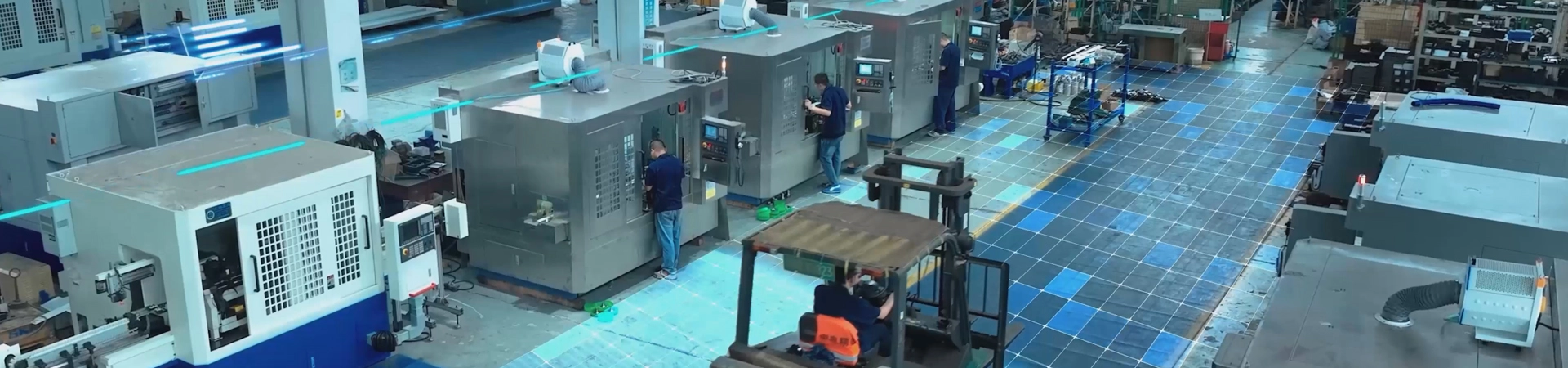
Unlike coarse removal processes, superfinishing typically removes only a few micrometres (µm) of material—enough to eliminate the surface damage layer, but without significantly altering geometry. This is critical for maintaining tight dimensional tolerances in precision parts.
– The surface produced by superfinishing is not simply "smooth" in a cosmetic sense, but is engineered to have a plateaued topology: flat micro-plateaus with shallow lubricant-retaining valleys rather than deep grooves or directional tool marks.
– This plateau structure improves functional performance: better oil film stability, reduced friction, higher bearing ratios.
– Because the process removes micro asperities and residual subsurface stress, the surface integrity (in terms of fatigue, wear and micro-crack initiation) is significantly improved.
– Superfinishing is performed with fine abrasive stones, films or special tooling under low pressure, often with oscillating, rotation or reciprocating movement of the workpiece and/or abrasive tool.
– The workpiece is typically already finished (e.g., ground or honed) to correct geometry; superfinishing comes last, focusing solely on surface quality refinement.
– Because of the low forces and fine abrasives, heat generation is minimal—avoiding thermal distortion or metallurgical changes in the component surface.
It's applied when the component demands:
Extremely low surface roughness (for example Ra ≤ 0.02 µm in some critical applications)
Enhanced functional surface characteristics (load-bearing surfaces, high-speed contacts, minimal friction)
Extended service life and reliability under extreme operating conditions
Very high standards of surface integrity (e.g., minimal micro-cracking, clean transitions, consistent lubrication behavior)
In many manufacturing scenarios (bearings, gears, shafts, hydraulic spools), once geometry is set, the limiting factor becomes surface condition. Micro-asperities, residual stresses or damaged surface layers can lead to early fatigue, wear or lubricant film breakdown. Superfinishing addresses those issues by refining the surface to a condition that supports optimal performance and durability.
The plateaued surface from superfinishing improves fluid film behavior: by offering shallow valleys to retain lubricant and minimizing asperity peaks that scrape the film. The result: a lower friction coefficient, less heat/energy loss and improved efficiency in moving systems.
Since superfinishing does little or no bulk material removal, it preserves geometric accuracy achieved in prior operations. This is crucial in industries where tolerances are tight and interchangeability is required (e.g., aerospace bearings, EV transmissions). The process enables consistent, repeatable performance across many parts.
While grinding, honing or polishing may deliver geometry or appearance, they often leave behind micro-damage, tool marks or residual stresses. Superfinishing sits at the end of the process chain, bridging the gap by providing the functional finish that translates geometry into reliable performance.
Bearings: Inner/outer races, rolling elements — surface condition directly influences fatigue life and noise/vibration behavior.
Shafts and spindles: Where high rotational speed or precise motion demands minimal surface irregularities.
Hydraulic components: Spools, valves where film stability and leak-resistance are critical.
Aerospace/automotive: High-precision components in powertrains, gearboxes and turbines where surface finish influences performance and lifecycle costs.
Medical devices and implants: Where surface quality affects biocompatibility, cleanliness and long-term stability.
Grinding / Honing – Achieve required geometry (roundness, cylindricity, taper, size). This step may leave directional tool marks, micro-cracks, a heat-affected or smeared layer.
Cleaning / Preparation – Remove grinding residue, check for surface damage.
Superfinishing – Using a superfinish machine, apply fine abrasive under low pressure, with oscillation or rotation of tool/workpiece. The goal: remove the damaged surface layer (typically < 2 µm) and produce plateau finish.
Post-process inspection – Measure surface roughness (Ra, Rz), check bearing ratio, verify residual stress if required, perform functional tests (friction, fatigue).
Final assembly / service – Components now ready with optimal surface condition for high-performance service.
Superfinishing is not simply a "nice-to-have" finish—it is a strategic enhancement in modern manufacturing. With its ability to refine surfaces to ultra-high standards, maintain geometry, improve lubrication behavior, reduce wear and extend service life, it plays a pivotal role in high-precision industries.
At Lanma, our portfolio of superfinishing machine is designed to meet these demands. If you are producing components where surface integrity is the differentiator, investing in the correct superfinishing technology is essential for staying competitive, reducing warranty risks, and delivering high-value, high-performance products.
 How an All-in-One Superfinishing Machine Improves Bearing Raceway QualityAugust 14, 2026An all-in-one superfinishing machine improves bearing raceway quality by refining the surface left after grinding, reducing microscopic peaks and grinding damage, and creating a more consistent contac...view
 Technology and Applications of Surface Grinding Machines, Surface Finishing Machines, and Surface Lapping MachineJanuary 13, 2026In modern manufacturing, the quality of part surfaces directly affects product performance, service life, and assembly precision. Surface grinding machines, surface finishing machines, and surface lap...viewCan Superfinishing Replace Traditional Polishing Processes Entirely?November 14, 2025In most precision industries, superfinishing has already replaced traditional polishing for critical components — but not in every case.A super finishing machine delivers far superior control over su...view
 Call us on:
  Email Us:
  No. 52-1 Zhang Road, Meicun Industrial Park, New District, Wuxi City, Jiangsu, China.