0510-83570861


2025-11-18
In modern automotive manufacturing, achieving ultra-low surface roughness and consistent dimensional precision is essential for performance, fuel efficiency, and durability.
While grinding and polishing set the geometry, superfinishing is the step that perfects it — removing micro-defects, improving lubrication retention, and extending component life.
A super finishing machine (also called a superfinish machine or super finisher machine) is now a standard requirement in advanced powertrain production lines for crankshafts, camshafts, and transmission components.
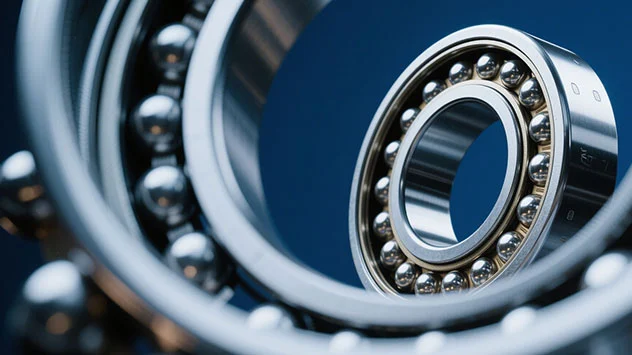
Automotive engines and transmissions rely on precise mating surfaces that operate under extreme speed, load, and temperature conditions. Even microscopic imperfections can cause friction, heat buildup, and wear.
Superfinishing addresses these challenges by:
Removing the damaged layer left by grinding or machining.
Creating a plateaued surface that retains lubricating oil while minimizing friction.
Reducing Ra values from ~0.2 µm after grinding to as low as 0.01 µm.
Eliminating stress concentrations that lead to fatigue or premature failure.
This combination results in quieter operation, higher efficiency, and longer component lifespan — all critical for modern internal combustion engines and EV powertrains.
Crankshafts endure cyclic loading, high rotational speeds, and oil film pressures. Their journals must maintain perfect roundness and minimal friction to ensure smooth engine operation.
Removes thermal damage and grinding marks from bearing journals.
Achieves mirror-like finishes (Ra ≤ 0.02 µm), reducing oil film breakdown.
Improves fatigue life by eliminating microcracks and tensile stress zones.
Reduces friction losses, improving fuel efficiency and lowering emissions.
Advanced super finisher machines with proportional pressure control and oscillation systems can fine-tune abrasive contact, guaranteeing uniform finishes across multiple journals simultaneously.
Camshafts must deliver precise valve timing while enduring high contact stresses between cam lobes and lifters. Surface imperfections directly affect wear, noise, and lubrication performance.
Produces consistent, plateaued surfaces that promote stable oil film formation.
Reduces scuffing and pitting on cam lobes.
Minimizes valvetrain noise and vibration.
Maintains dimensional stability under thermal expansion.
Using a superfinish machine ensures each cam lobe and bearing surface meets exact surface roughness and geometry requirements — critical for both combustion engines and hybrid systems.
Modern transmissions — whether automatic, dual-clutch, or electric drive units — rely on high-precision gears, shafts, and synchronizers. Surface smoothness directly impacts efficiency, NVH (noise, vibration, harshness), and component longevity.
Reduces frictional losses between gear teeth and shafts.
Improves tooth contact pattern and minimizes pitting fatigue.
Extends gearbox life by reducing wear and heat generation.
Enhances lubrication film retention, even under thin-film conditions.
Automotive OEMs now integrate super finishing machines directly into automated transmission production lines to ensure consistent surface integrity and eliminate post-assembly noise issues.
Because these parts operate under high dynamic loads and rely on oil film lubrication. Superfinishing improves surface integrity, reduces friction, and prevents wear and fatigue — essential for reliability and efficiency.
Modern super finisher machines can achieve Ra values as low as 0.01–0.02 µm, creating mirror-like, plateaued surfaces ideal for high-speed rotating components.
Yes. By lowering frictional losses between moving parts, superfinishing contributes to better fuel economy and reduced CO₂ emissions, especially in engines and transmissions.
Polishing improves appearance but doesn't correct the micro-damage layer. Superfinishing removes that layer, ensuring functional surface integrity and long-term durability.
Absolutely. EV components such as reduction gears, e-axle shafts, and bearing races require ultra-smooth, low-noise finishes. A super finish machine ensures the high surface precision demanded in EV drive systems.
From internal combustion engines to electric drivetrains, superfinishing has become a defining step in automotive precision manufacturing.
By refining surfaces to sub-micron smoothness and eliminating residual stress, a super finishing machine ensures every crankshaft, camshaft, and transmission component delivers peak performance, low noise, and extended life.
For manufacturers aiming to meet stricter emission standards, improve efficiency, and reduce warranty costs, investing in an advanced superfinisher machine is not just a process upgrade — it's a competitive advantage in the future of automotive engineering.
 Analysis of Superfinishing Technology for BearingsJanuary 13, 2026Differences in Bearing Superfinishing TechnologyBearing superfinishing technology refers to using high-precision machining methods in bearing manufacturing to further enhance surface quality and dimen...view
 What Is Superfinishing Process?November 27, 2025The superfinishing process is a precision surface refinement method designed to remove the damaged layer left after grinding and achieve extremely low surface roughness — often reaching Ra ≤ 0.02 µ...viewComparing Wet vs. Dry Superfinishing Processes: Which Is Better?November 14, 2025In precision surface finishing, both wet and dry superfinishing processes can achieve excellent results — but they serve different purposes.Wet superfinishing provides superior heat control and longe...view
 Call us on:
  Email Us:
  No. 52-1 Zhang Road, Meicun Industrial Park, New District, Wuxi City, Jiangsu, China.