0510-83570861

2025-11-17
In precision surface finishing, both wet and dry superfinishing processes can achieve excellent results — but they serve different purposes.
Wet superfinishing provides superior heat control and longer abrasive life, making it ideal for high-volume bearing and automotive production.
Dry superfinishing, on the other hand, offers cleaner operation and lower environmental impact, suitable for small-batch or specialty components.
Ultimately, the better process depends on your application, material type, and surface finish requirement — not a one-size-fits-all choice.
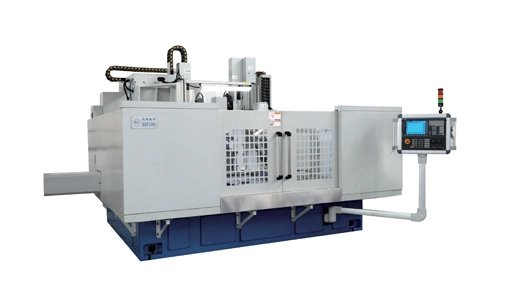
In wet superfinishing, a low-viscosity lubricant or oil is continuously supplied between the abrasive stone and workpiece. This fluid cools the contact zone, removes debris, and stabilizes the frictional interface.
Dry superfinishing eliminates this coolant, using compressed air or minimal mist to control temperature and remove particles. The process relies on precise control of pressure, oscillation, and abrasive wear compensation to prevent overheating.
| Aspect | Wet Superfinishing | Dry Superfinishing |
Lubrication Medium | Oil or emulsion coolant | Air or minimal lubricant mist |
Heat Control | Excellent | Moderate |
Debris Removal | Continuous flushing | Compressed air or vacuum |
Surface Finish (Ra) | 0.01–0.05 µm | 0.05–0.08 µm |
Abrasive Life | Longer | Shorter |
Cleanliness | Requires fluid management | Cleaner, no oil residue |
Environmental Impact | Needs fluid disposal system | Eco-friendly and simpler maintenance |
Wet superfinishing is the industry standard for high-performance applications where surface integrity and consistency are critical.
This method is best for:
Bearing races and rolling elements requiring Ra < 0.03 µm.
Automotive crankshafts, camshafts, and transmission parts operating under load and lubrication.
Aerospace components where temperature control and fatigue resistance are essential.
In these scenarios, a super finishing machine with controlled lubrication flow ensures constant temperature, minimal friction, and uniform material removal — resulting in a flawless plateaued surface.
Example: The Lanma super finisher machine line uses proportional pressure control and automatic stone wear compensation to maintain uniform contact force, ensuring consistent surface roughness even in long production runs.
Dry superfinishing offers clear advantages for eco-conscious manufacturers and low-volume precision work.
It eliminates oil management systems, reduces waste disposal costs, and simplifies cleaning between batches. Modern superfinish machines equipped with advanced temperature monitoring and high-efficiency air systems can deliver stable results even without coolant.
Ideal for:
Components where lubrication residue must be avoided (e.g., medical implants, sensor parts, small precision shafts).
Facilities prioritizing environmentally friendly and maintenance-light operations.
Low-to-medium production volumes with tight but manageable roughness targets.
However, dry finishing has limitations in removing heat and fine debris — which can slightly affect Ra values compared to wet systems.
Before selecting your process, evaluate the following:
Material Type – Hard-to-machine steels or high-alloy materials benefit from wet finishing to prevent thermal stress.
Required Surface Roughness – For ultra-low Ra (< 0.02 µm), wet finishing remains superior.
Production Volume – Wet systems suit continuous production; dry systems excel in flexible, short runs.
Environmental Goals – Dry systems reduce oil usage and disposal, aligning with green manufacturing trends.
Machine Capabilities – A CNC-controlled superfinisher machine with adjustable pressure and oscillation frequency can optimize either process effectively.
For ultra-precision surfaces and heavy-duty production, wet superfinishing delivers more stable and consistent results. However, dry finishing is ideal for clean, sustainable, and flexible operations with moderate finish requirements.
Not if the machine is properly designed. Modern superfinish machines use optimized oscillation frequency, airflow cooling, and real-time temperature monitoring to prevent heat buildup.
Although wet systems require oil filtration and fluid disposal, they extend abrasive life and reduce part rework — often resulting in lower total cost per component for mass production.
Yes. Advanced super finishing machines such as Lanma’s MSF series can switch between wet and dry modes with modular fluid or air systems, giving manufacturers greater flexibility.
Dry superfinishing can typically achieve Ra ≈ 0.05 µm, sufficient for many mechanical and medical applications, while wet finishing can reach Ra ≈ 0.01 µm or finer.
Both wet and dry superfinishing methods have their place in modern manufacturing.
If you prioritize maximum precision, surface integrity, and productivity, a wet process using a high-end super finishing machine is the better choice.
If your focus is on clean operation, sustainability, and cost control, a dry superfinish machine offers excellent performance with lower environmental impact.
Choosing the right super finisher machine depends on your material, finish specification, and production goals — and working with a trusted manufacturer like Lanma ensures your system is optimized for both precision and profitability.
 Superfinishing vs. Grinding: Which Process Produces Better Ball Bearings?July 8, 2026Grinding and superfinishing are complementary rather than competing processes, but when the goal is maximum bearing performance, superfinishing delivers superior results. While a ball bearing grinding...viewCan Superfinishing Replace Traditional Polishing Processes Entirely?November 14, 2025In most precision industries, superfinishing has already replaced traditional polishing for critical components — but not in every case.A super finishing machine delivers far superior control over su...viewWhy Do Bearing Manufacturers Use Integrated Grinding and Superfinishing Lines?November 14, 2025In precision surface finishing, both wet and dry superfinishing processes can achieve excellent results — but they serve different purposes.Wet superfinishing provides superior heat control and longe...view
 Call us on:
  Email Us:
  No. 52-1 Zhang Road, Meicun Industrial Park, New District, Wuxi City, Jiangsu, China.