0510-83570861


2025-11-15
Industries that require high precision, low friction, and long component life benefit most from super finisher machines — including automotive, aerospace, bearing manufacturing, hydraulic, medical, and precision tool industries.
A super finishing machine delivers mirror-like surfaces, eliminates microscopic damage left by grinding, and improves the functional performance of components under dynamic load and lubrication. In short, any sector where surface integrity defines product reliability will see measurable advantages from superfinishing technology.
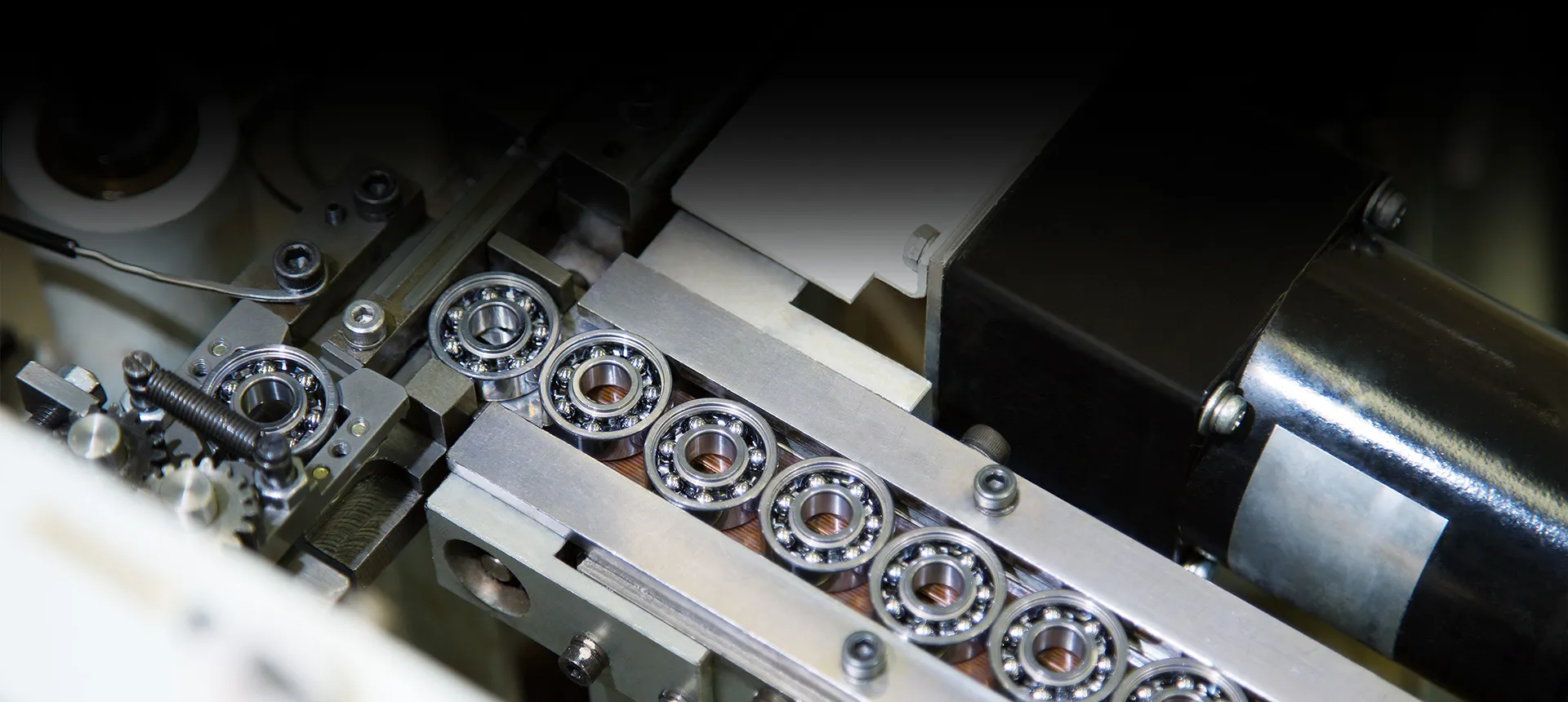
The automotive sector is the largest user of super finishing machines, especially for engine and transmission components. Precision surfaces are essential for achieving lower friction, reduced wear, and improved fuel efficiency.
Crankshafts and camshafts – superfinished to Ra ≤ 0.02 µm for stable oil film retention.
Transmission shafts and gears – improved surface integrity reduces NVH (noise, vibration, harshness).
Bearing races and rollers – extended fatigue life and lower operational noise.
Fuel injection components – superfinishing ensures smooth flow and accurate pressure sealing.
Advanced super finisher machines with CNC pressure control, automatic stone wear compensation, and wet lubrication systems ensure consistent results across mass-production lines — critical for meeting modern emissions and performance standards.
In aerospace manufacturing, dimensional accuracy and surface reliability are non-negotiable. Components such as turbine shafts, gearboxes, and actuator parts operate under extreme temperature and load conditions.
Achieves sub-micron smoothness (Ra ≈ 0.01 µm) to prevent micro-crack initiation.
Improves fatigue resistance by removing tensile stress layers left by grinding.
Reduces frictional heating in rotating assemblies.
Ensures long-term stability under thermal cycling and vibration.
Aerospace OEMs use superfinish machines to meet strict aerospace quality standards (e.g., AS9100, ISO 9001) where surface finish directly influences flight safety and performance.
No industry demonstrates the benefits of superfinishing better than bearing manufacturing.
Bearings are built to support dynamic motion with minimal resistance — which means surface texture, roundness, and load distribution are vital.
Removes grinding burn and micro cracks.
Creates plateaued surfaces for stable oil film behavior.
Extends fatigue life by 30–50%.
Reduces operational noise and vibration levels.
Modern super finishing machines can process both inner and outer bearing rings using advanced clamping systems and proportional pressure control.
Lanma's MSF1000 All-in-One Superfinishing Machine, for instance, supports diameters up to Ø1000 mm and ensures consistent surface quality across bearing types — from deep-groove to tapered roller bearings.
Hydraulic systems depend on smooth, precisely matched surfaces for leak-free operation and energy efficiency.
Roughness, waviness, or surface scratches directly affect sealing performance and system reliability.
Hydraulic spools, pistons, and cylinders – reduced friction between mating parts improves flow response.
Valve components – mirror-finished sealing faces prevent leakage.
Pump shafts and sleeves – enhanced wear resistance for longer service life.
A super finisher machine enables surface roughness as low as Ra = 0.02 µm, improving sealing effectiveness and system efficiency in both mobile and industrial hydraulics.
The medical industry increasingly uses superfinishing to enhance both functional performance and biocompatibility.
Components such as orthopedic implants, surgical instruments, and dental tools require high surface integrity for friction reduction and corrosion resistance.
Produces micro-smooth surfaces for tissue-friendly implants.
Improves cleanliness and sterilization compatibility.
Enhances fatigue strength and reduces fretting wear.
Because these parts often use titanium or stainless steel, the controlled pressure and low-temperature process of a superfinish machine prevent material distortion or contamination.
Superfinishing is also widely applied to spindles, dies, cutting tools, and precision rollers used in industrial machinery.
Reduces tool wear and frictional heat generation.
Enhances dimensional consistency of machined parts.
Extends service life of high-speed rotating elements.
Improves coating adhesion for PVD or CVD-treated tools.
In this segment, manufacturers often use dry or minimal-lubrication superfinishing systems to achieve clean and efficient operations without coolant waste.
The top users are automotive, bearing, aerospace, hydraulic, and medical industries, all of which demand precision and durability from moving components.
A super finishing machine can process hardened steel, stainless steel, ceramics, and non-ferrous metals such as brass and titanium, depending on the abrasive and lubricant type.
It refines surface roughness, removes micro-cracks, enhances lubrication retention, and reduces friction — resulting in longer part life, lower energy loss, and quieter operation.
Yes. Grinding defines geometry, but it leaves behind micro-damage and residual stress. Superfinishing removes these imperfections, ensuring true surface integrity.
Yes. Modern CNC superfinish machines are designed with modular fixtures and programmable parameters to process various components — from bearing rings to shafts and gears — on the same platform.
From cars to aircraft, from surgical implants to industrial spindles — super finishing machines are vital for industries that depend on precision, reliability, and surface performance.
By delivering sub-micron finishes, reducing friction, and extending component lifespan, a super finisher machine directly enhances both product quality and operational efficiency.
For manufacturers aiming to meet stricter performance standards while maintaining cost efficiency, Lanma’s advanced superfinish machine solutions provide the flexibility, accuracy, and productivity needed to stay competitive in today's precision-driven industries.
 Super Finishing for Precision Bearing ManufacturingSeptember 3, 2025Superfinishing is a critical step in precision bearing manufacturing, ensuring ultra-low surface roughness, improved bearing ratios, and extended service life. While grinding and honing establish geom...view
 Analysis of Superfinishing Technology for BearingsJanuary 13, 2026Differences in Bearing Superfinishing TechnologyBearing superfinishing technology refers to using high-precision machining methods in bearing manufacturing to further enhance surface quality and dimen...viewSuperfinishing vs. Grinding: Which Process Produces Better Ball Bearings?July 8, 2026Grinding and superfinishing are complementary rather than competing processes, but when the goal is maximum bearing performance, superfinishing delivers superior results. While a ball bearing grinding...view
 Call us on:
  Email Us:
  No. 52-1 Zhang Road, Meicun Industrial Park, New District, Wuxi City, Jiangsu, China.